Op-ed written by Annie Kim, Founder at Airie.
At some point the question stopped being should someone solve this? It became if not me,
then who?
While working at Immigration New Zealand, I kept seeing the same problem from different angles. People weren’t failing the system because they were careless. They were failing because understanding the rules required time, interpretation, and often someone translating complexity into plain meaning. The gap wasn’t information, it was usability. I tried to ignore it for a while – I was busy enough at work – but the thought kept returning. Around the same time, AI capability was accelerating rapidly. For the first time, it felt technically possible to turn complex policy into something navigable for ordinary people. The only problem was I had no idea how to start a startup. So I did the most honest Day 1 thing possible. I Googled startup events Wellington. That search led me to Creative HQ. Soon after, Airie began to take shape.
You don’t start with a startup

I didn’t arrive with a product or a clear plan. “Simplify immigration” was closer to a direction than a concept. What changed early on wasn’t the idea, but how I approached it. Being around other founders shifted my expectations of progress. Instead of trying to design the right solution, I started testing smaller assumptions. Conversations forced clarity. Mentors challenged reasoning I hadn’t examined yet. The startup ecosystem didn’t remove doubt, it made it productive. Terms like MVP, product market fit, pivoting, and moat stopped being jargon and became decision tools. I learned to test, observe, and adjust, then repeat. That shift fundamentally shaped Airie. The product didn’t emerge from a plan, but from iteration.
What Creative HQ actually provides
Creative HQ runs programmes across fintech, climate tech and creative tech, but their real impact isn’t limited to programmes. Not every company fits neatly into an industry box. Airie didn’t. What mattered was proximity to people building different kinds of things and confronting similar unknowns. The workshops, events, and daily interactions gradually recalibrated how I thought about progress. Resilience is easier when the pace of building is shared and understood. Momentum becomes something you participate in rather than generate alone.
The moment it came full circle

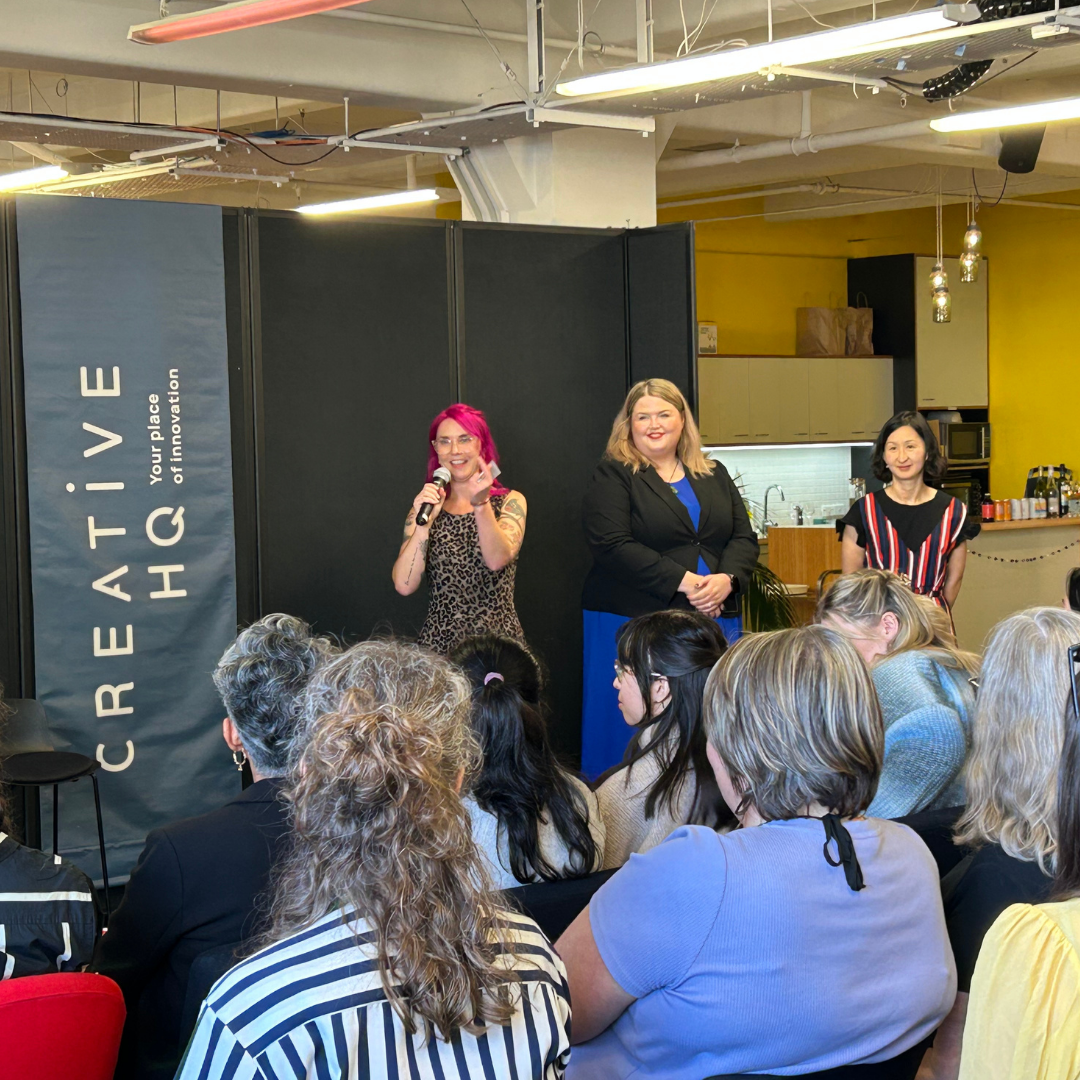
Six months in, Creative HQ invited me to speak on a female founders panel. I initially hesitated because I didn’t feel far enough along to have lessons worth sharing. The conversations afterwards changed that view. People connected not with achievements, but with the reality of starting before certainty exists. Several attendees mentioned it made beginning feel accessible. That, more than any milestone, marked a shift from learning within the ecosystem to contributing back to it. Within a year, our team had built a product at the intersection of immigration and education that customers now ask why it didn’t exist earlier. The idea didn’t appear fully formed, and it looks much different from where it started. We simply persisted and iterated until clarity emerged.
What should you do?
Everyone has ideas. Founders are the ones who stay with a problem long enough to reshape themselves around solving it. Startups aren’t built in isolation – they’re built in environments that make persistence possible. If you’re at Day 1, show up. Go to an event, have the conversation, and let the ecosystem do its work.

If you have an idea that’s becoming hard to ignore, go to Creative HQ.