Who we worked with
NZ Claude Ambassadors, Zuno Smart Lab and Wellington City Council (WCC)
What we’re working on together
The Claude Impact Lab
Crisis management in Wellington isn’t a question of “if” – it’s “when.” Our community knows earthquakes, floods, traffic and slips all too well; resilience is a way of life here in Pōneke. So when thinking about where AI could make a real difference, and fast, emergency management stood out as an obvious place to start for our city. That’s the thinking behind the Claude Impact Lab: a one-day civic AI hackathon designed to build systems that help keep Wellington informed in a crisis.
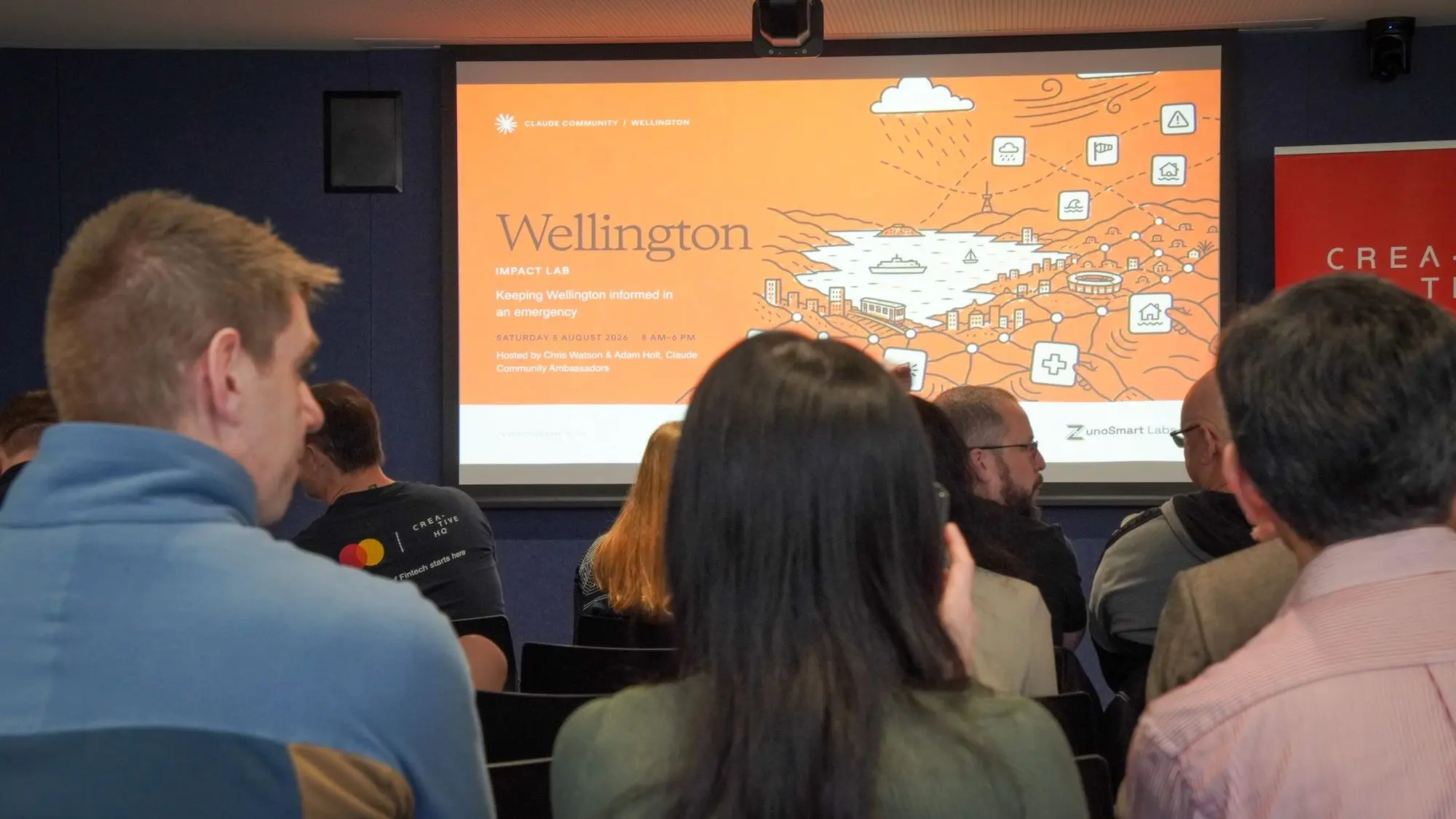
Decisions around crisis management are only as good as the information available to inform them. Wellington City Council (WCC)’s Emergency Management team has had 10 callouts in the last two years, giving them first-hand experience of the complexity and pressure involved in responding to an emergency.
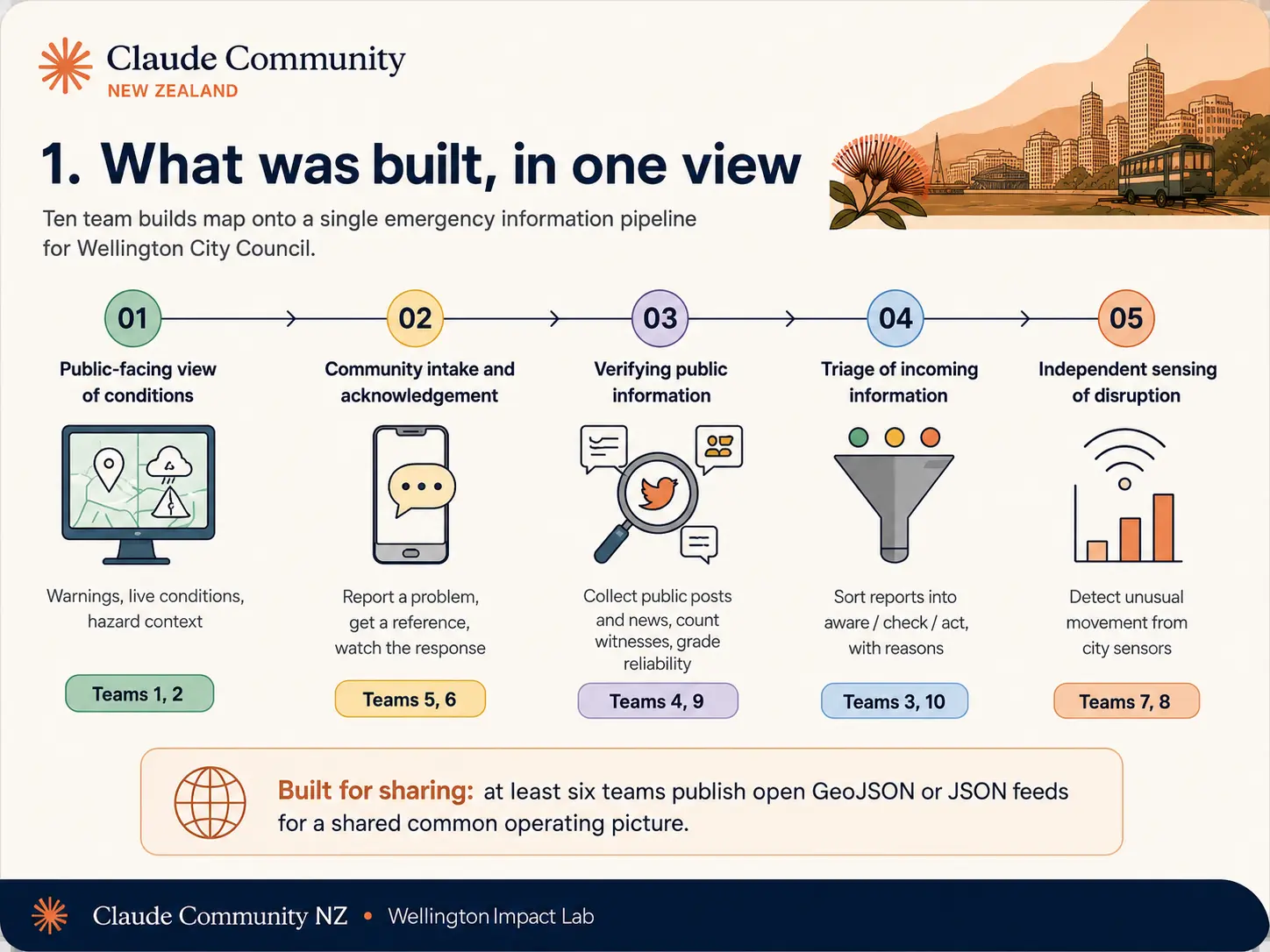
Rather than starting with hypothetical problems, the WCC team identified five real challenges where better use of information and technology could make a difference:
- Bring official warnings and local conditions into one community view.
- Create a two-way information channel between communities and Council.
- Identify and verify emerging local impacts from public information.
- Help emergency staff sort and prioritise incoming information.
- Detect unusual changes in movement around the city.
These challenges became the foundation for the Lab – and for a day of intensive collaboration between people who may not normally work together.
Appetite for change
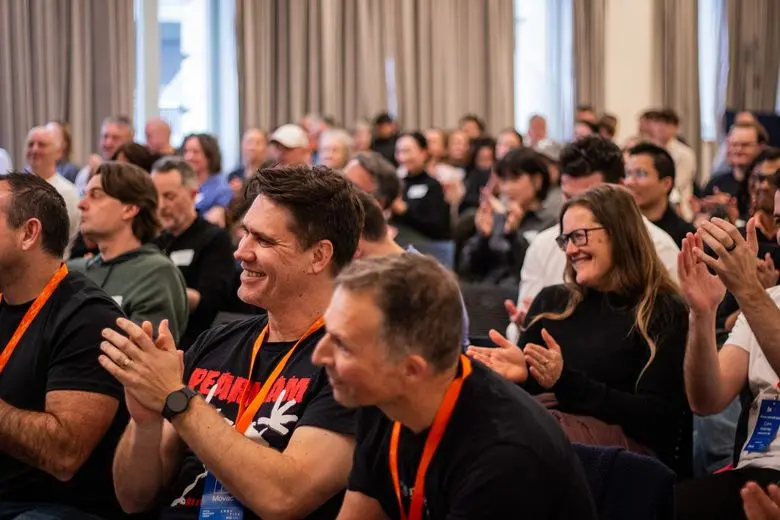
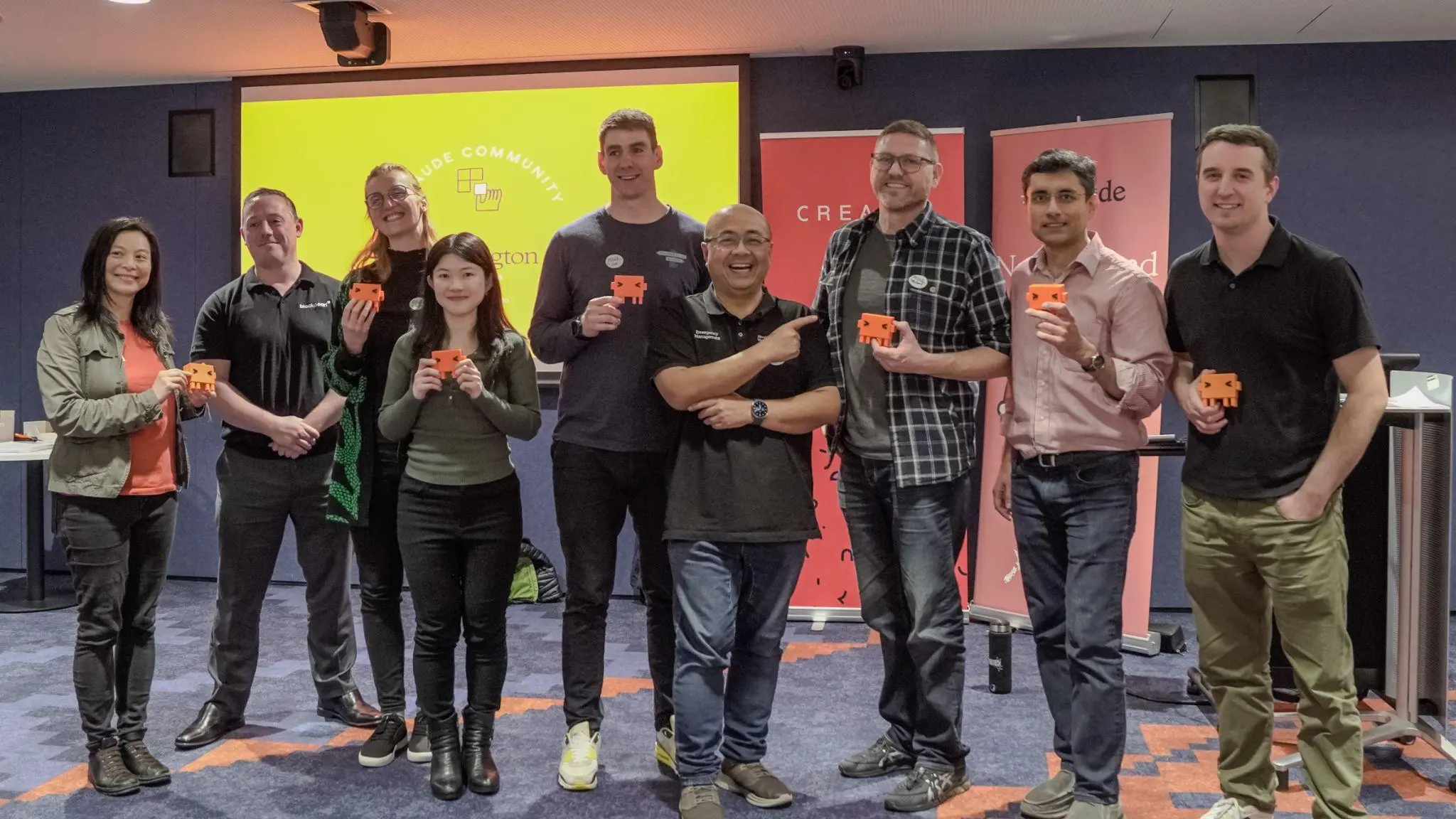
This event was listed for only five days but was oversubscribed within the first day. More than 100 people applied for just 50 places.
With capacity limited to 10 teams of five, the organising group deliberately selected participants with complementary skills and perspectives across technology, emergency management, community management and the wider Wellington ecosystem.
Many of those who took part were senior professionals and leaders, giving up their Saturday to work on a problem that directly affects the city they live in.
Creative HQ worked alongside the NZ Claude Ambassadors Adam Holt and Chris Watson, partners from Zuno Smart Lab and leaders at WCC to design the Lab around the people, expertise and tools needed to turn these challenges into viable prototypes.
Each team was given a specific problem brief, pre-loaded datasets from publicly available sources such as NZTA and MetService, access to Claude skills and credits, and a WCC Emergency Management subject matter expert.
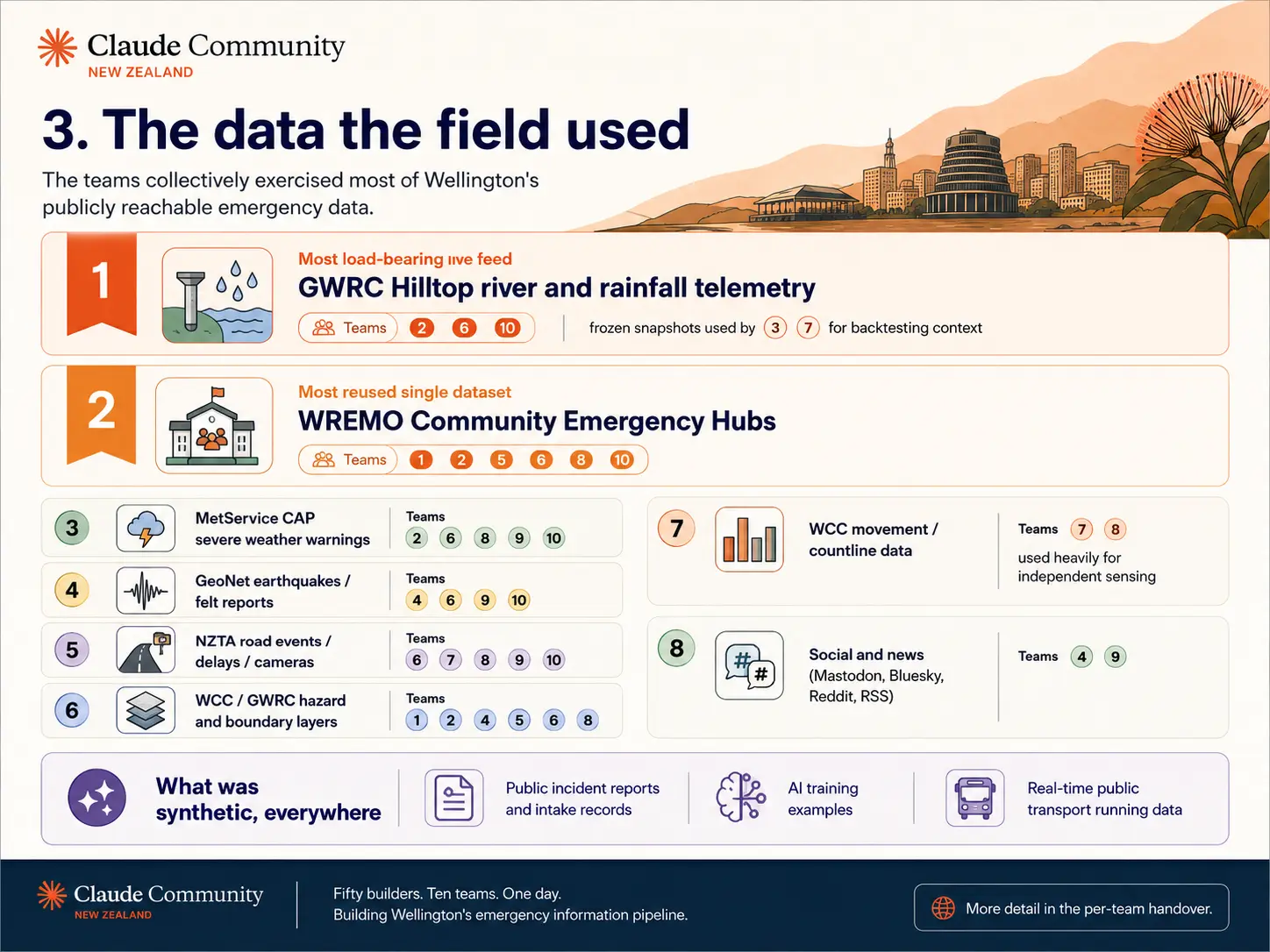
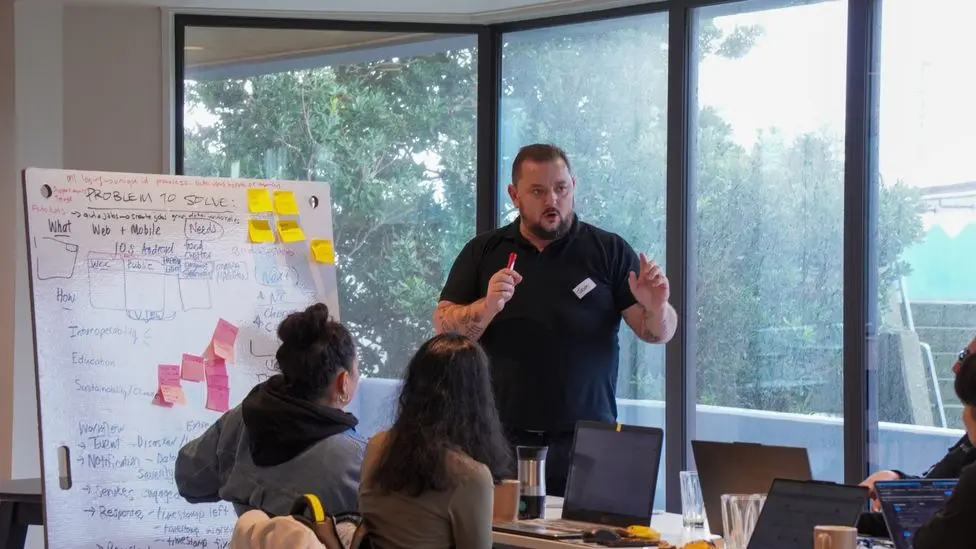
The day was designed to build quickly. Teams self-organised around their problem statements, working with WCC Emergency Management experts to understand what the challenges looked like in practice, including how the public might interact with these technologies in emergencies. Using publicly available information, including official warnings, hazard layers, river and rainfall gauges and other data sources, teams used Claude to rapidly explore ideas, build and test solutions, and iterate on their prototypes.
By 4:00 pm, every team had something to show.
Collaboration is central
All teams presented working prototypes in three-minute pitches, demonstrating what they had built, the problem it addressed and how it could support Wellington during an emergency.
The code and outputs from the Lab were shared on GitHub, creating an open foundation that future builders can continue to develop, adapt and potentially apply to other cities and communities.
This is an important part of the Impact Lab model: creating a space where ideas can be tested quickly, shared openly and developed beyond the initial event.
It brought together people who understand Wellington, emergencies, technology – who are willing to give their time to build something that could make a difference.
Tangible results
Five real emergency management challenges were tackled. And in just six hours, all ten teams produced working prototypes.
But perhaps the most significant result was what the Lab demonstrated about the combination of people, data and emerging AI tools.
The Claude Impact Lab showed how much can happen when a community brings its expertise and skillset to a shared problem.
People who might normally spend weeks or months exploring a concept were able to build and test solutions in a single day. Publicly available data could be transformed into meaningful insights and new ways of supporting emergency response.
“Effective emergency response depends on having the right information at the right time. It was fantastic to see Wellington’s technology community apply their skills to real emergency management challenges, developing solutions that could help us better understand what’s happening in real time, identify emerging issues and strengthen communication with our communities. The outcomes of the day were immensely valuable, giving us new ways to think about how we can continue improving our emergency response capability, both here in Wellington and potentially in communities around the world.”
– Phil Becker, Manager, City Development and Emergency Management
The next step is for WCC to digest the outputs from the Lab and explore how they could be developed and utilised in the future.
For Wellington, the Lab was also a demonstration of what civic innovation can look like when government, industry, technology and community come together around a problem that matters.
For Creative HQ, it is a model we can take further.
The Impact Lab approach can be applied to other complex challenges – bringing the right people into the room, giving them access to real-world problems and data, and creating the conditions to move from challenge to prototype at speed.