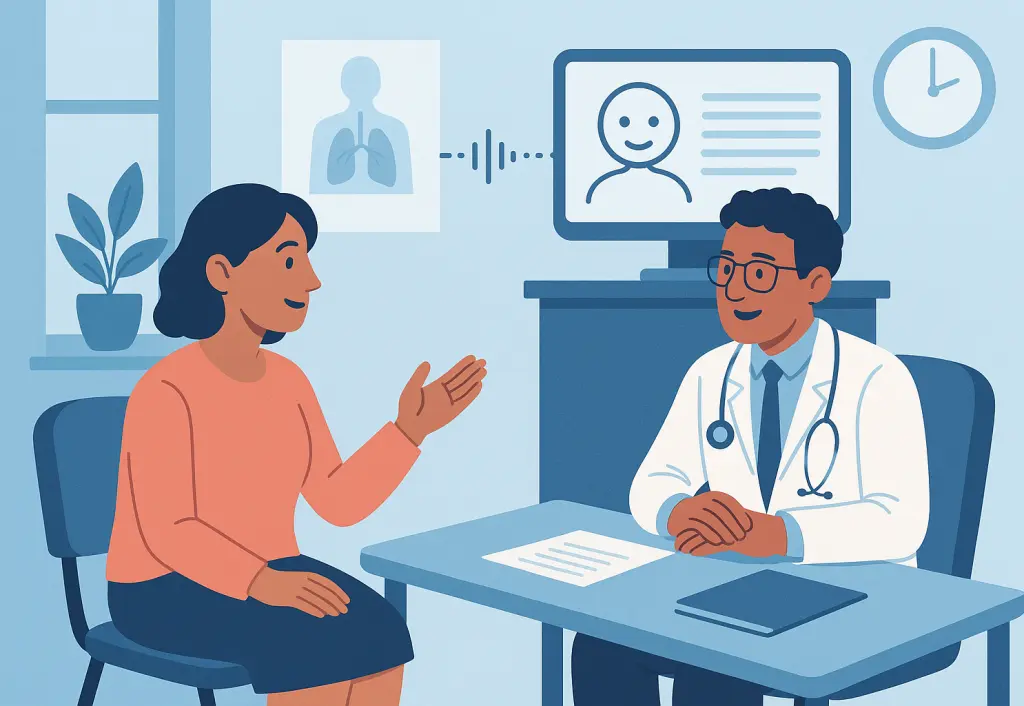
Health NZ has rolled out Heidi, an Australian-built AI clinical scribe, to 27 hospitals through its HealthX programme (the NZ Herald also has good background). The Hawke’s Bay pilot results are worth noting: documentation time per patient dropped from around 17 minutes to four, after-shift admin fell by up to 81%, and clinicians report reduced cognitive load and better focus during consultations.
What other agencies can take from this
The story has two strands. In general practice, GPs started using AI scribes on their own because they solved an immediate problem. A 2024 University of Otago survey found 40% of NZ GPs had already tried one, and by early 2025 broader surveys showed 68% of primary care respondents were using AI tools of some kind.
In the public hospital system, Health NZ’s HealthX innovation programme led the rollout, licensing Heidi across 27 hospitals for 1,000 emergency clinicians and 100 mental health crisis teams. This was planned and coordinated, with the programme selecting the tool, managing licensing, and rolling it out across sites.
Both routes offer something for other agencies thinking about this space:
- The GP experience shows what happens when a tool meets a real pain point. People pick it up quickly without needing to be told. That’s a useful signal for identifying where AI tools are most likely to stick.
- The HealthX approach shows how to do it at scale. A central programme identifying the use case, choosing the product, and managing the rollout. For most agencies, this is closer to the path they’d need to take.
- Look for the documentation bottleneck. Wherever frontline workers spend significant time writing up interactions after the fact, there’s likely a use case. Social work, corrections, ACC case assessments, WINZ appointments. Someone has a conversation, then spends time turning it into a written record.
- The UK is already doing this outside health. AI transcription is in use across 85 local authorities for social care, and the AI Exemplars Programme includes Justice Transcribe for probation and court services.
- Local alternatives exist. Heidi dominates the NZ market, but TEND has built its own AI scribe for its GPs, and Carepatron (founded in Tauranga) offers practice management with built-in scribing used in over 120 countries. Health NZ has also endorsed iMedX.

Questions to get right before scaling
The health rollout also surfaces issues that matter more as this technology moves into other parts of government.
- Data sovereignty. As of late 2025, NZ patient data was being stored on encrypted servers in Sydney. Heidi says it’s working on local storage but hasn’t disclosed which third party hosts the data. The Health Information Privacy Code 2020 and expectations around Māori data sovereignty both raise questions any agency would need to work through.
- Consent. The Otago survey found 41% of providers using AI scribes weren’t seeking explicit patient consent. In health, the Medical Council is developing guidance. In other contexts, like social work or benefit assessments, consent processes would need to be designed from scratch.
- Accuracy in complex settings. EDs are loud, multi-patient environments. Clinicians report the AI can struggle to tell patients apart and sometimes confuses what a patient says with a clinical finding. In a GP consultation, an inaccurate note is something you can catch and correct. In social work or benefit assessments, where records can affect decisions about someone’s life or entitlements, the margin for error is smaller.
- What fills the time you save. The Ada Lovelace Institute’s recent report Scribe and Prejudice? on AI transcription in UK social care made a useful point: time saved on documentation doesn’t automatically lead to better outcomes. It depends what fills the gap. More time with patients or clients? Or higher throughput expectations? Agencies adopting these tools should think about that question early.
- The build vs buy question. Health NZ tried building its own scribe product, Tuhi, but pulled it early after technical issues. The in-house effort couldn’t match Heidi’s scale (backed by $170 million in venture capital, handling two million consultations a week globally). It’s a question every agency will face: when does local capability matter enough to invest in, and when does buying an established product make more sense?
Our take
This is one of the more promising AI applications in the NZ public sector. The use case is clear, the adoption has been strong, and the potential beyond health is there. The focus should stay on what makes it work: helping frontline workers spend less time on paperwork and more time with the person across the desk. If agencies get the governance right on data, consent and accuracy, the health rollout becomes a useful reference point for the rest of government.
Sources: RNZ,NZ Herald, Healthcare IT News, University of Otago (Ballantyne et al., 2025), Ada Lovelace Institute “Scribe and Prejudice?”(2025), Heidi Health,Beehive.govt.nz

Written by Jonnie Haddon
GM Government Innovation