Fiji’s Innovation Hub may only be one year old, but this isn’t a short story. Nor is it a running tally of events and programmes. It’s a story of how one nation committed to economic growth through innovation. How the right partnerships came together to make it happen. How people gave up their own time to build a vibrant community. How one country leaned on another to learn and apply lessons already hard-won. And how this Hub has given new opportunities legs and traction, where before they were just ideas.
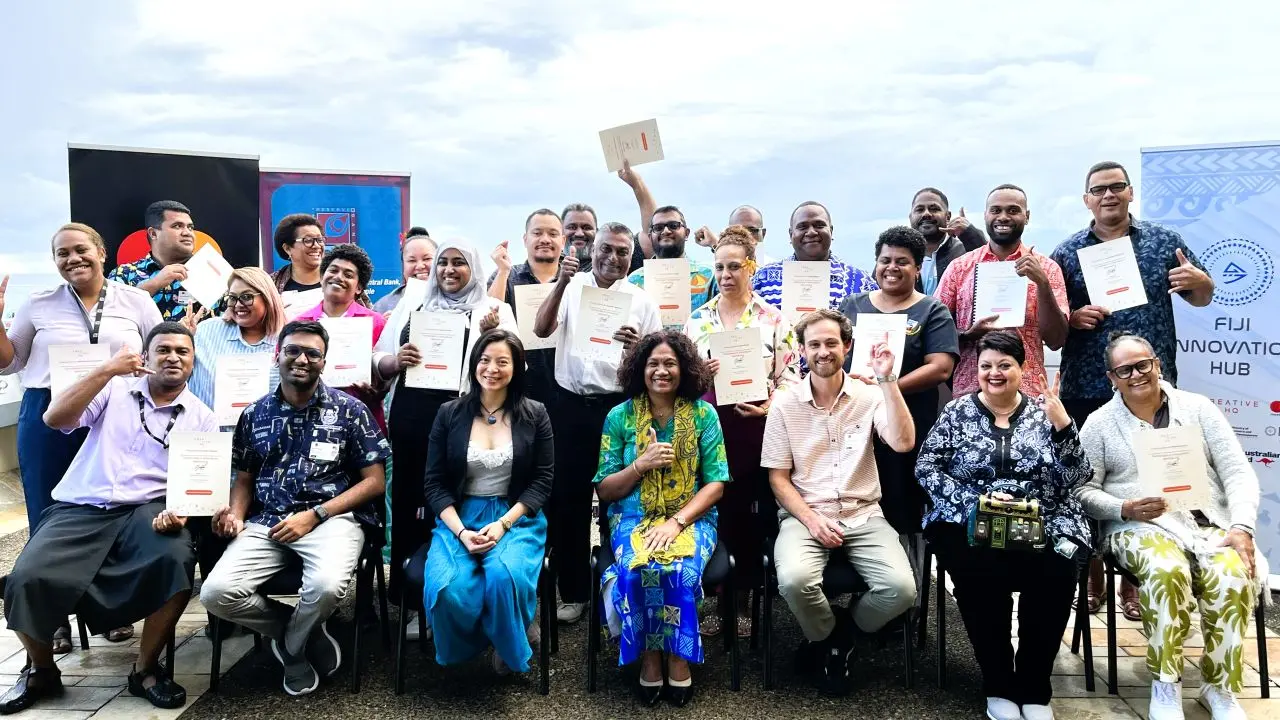
A year ago, the Fiji Innovation Hub was a media release and a promise. Today it’s a physical home on Level 9 of the Reserve Bank of Fiji, a trained mentor network, a national hackathon, an accelerator cohort, Fiji’s first Startup World Cup, a youth hackathon on one of the most remote islands in the Pacific, and a founder pipeline running from first idea to the international stage.
When someone asks us what a growing innovation ecosystem looks like, this is one of the best stories you could ever point to.
A shared commitment to innovation – day one
In July 2025, the Reserve Bank of Fiji stood up and said it would lead this. Alongside UNCDF (United Nations Capital Development Fund – as part of the Pacific Digital Economy Programme), Mastercard and Creative HQ with the Ministry of Industries, Commerce and Business Development, HFC Bank and Fiji Airways backing it locally – the Hub was launched as a multi-year commitment to build a mature, regional innovation ecosystem by 2030.
Governor Ariff Ali put it simply at the time: “The Reserve Bank has put its hand up to lead this effort, recognising the transformative potential of innovation and technology in unlocking economic opportunities.”
The building blocks for real impact
The first few months were about groundwork most people never see. RBF, UNCDF and a group of key stakeholders travelled to Wellington to spend time with New Zealand’s innovation ecosystem – meeting the likes of Sharesies, Hnry, FMA, WellingtonNZ, Kiwibank and NZGCP – and came home with the roadmap for the year. A seven-person Advisory Group was formed, chaired by Palinda Erasito Kaitu’u, to keep the Hub accountable to the ecosystem it was meant to serve.
None of this could move forward without building the teams’ capabilities. Twenty graduates came through Creative HQ’s Certificate in Applied Innovation – four of them went on to build The Forge, a training organisation for MSMEs that has since landed their first three commercial contracts. One graduate summed up what the course actually taught them: “It’s not about endless planning, it’s about deep diving, prototyping, and collaborating.”
Alongside this, twenty-five mentors came through the Certificate in Innovation Mentoring, several of them putting their new skills straight to work weeks later at the Hackathon.
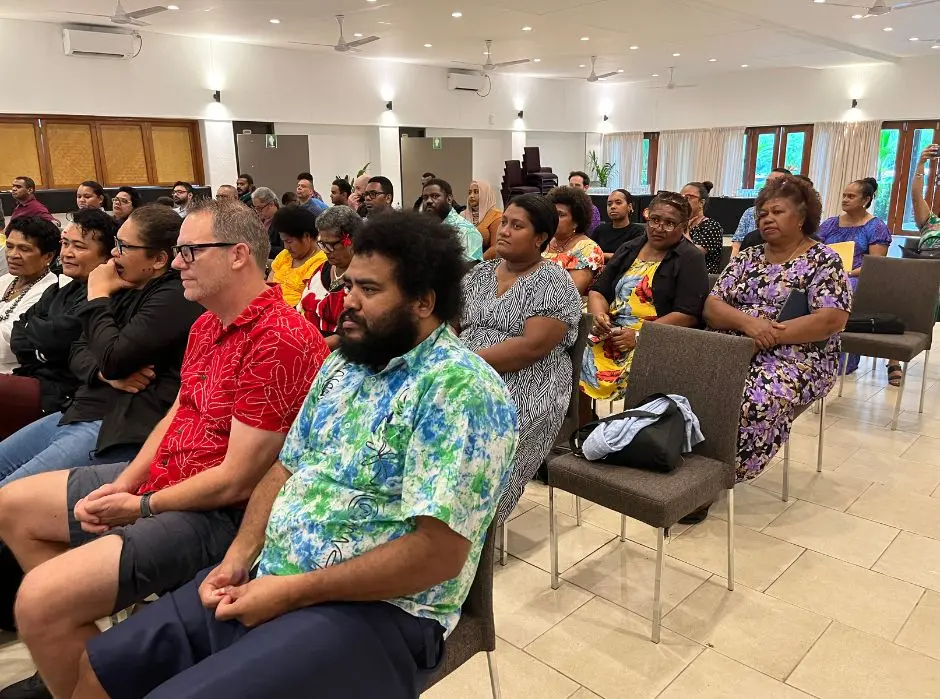
By November, the Hub ran its first big public event: the Unconference. 80 people across seven breakout themes and made a deliberate choice not to make it about RBF or a panel of experts on stage. It was about welcoming the right people into the room and building on the momentum that already existed in the ecosystem – not trying to replace anything.
Building momentum
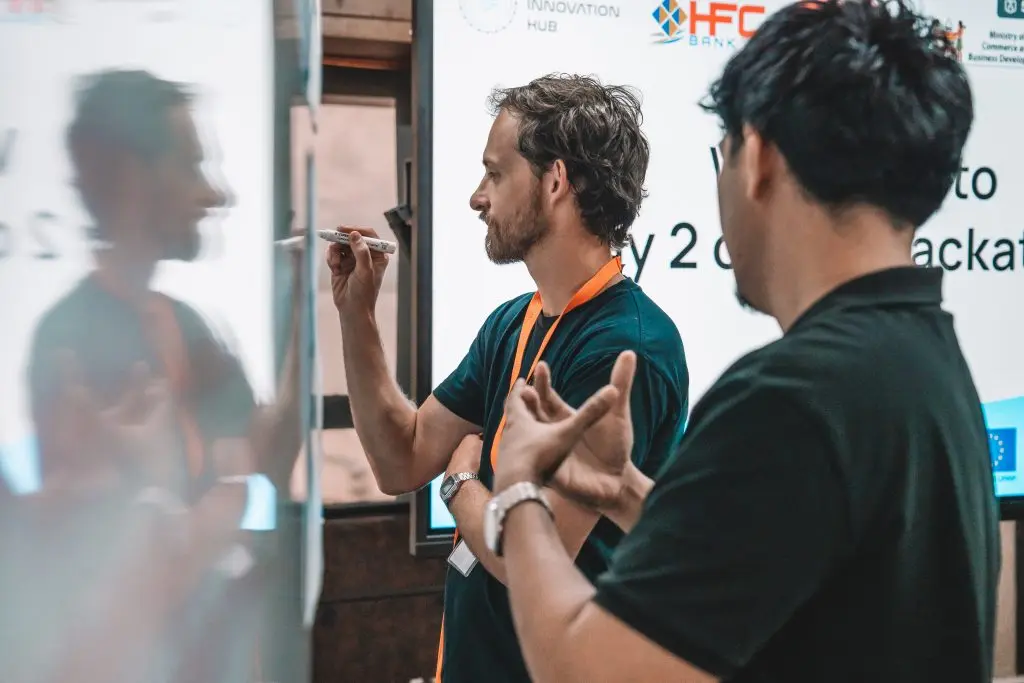
February brought the Hackathon: 65 participants, 13 teams, 100% retention, an NPS of 71, and 36% female participation – with two television crews on-site to capture it. One participant called it “one of the most exciting entrepreneurship events Fiji has ever seen.” Another put it even more plainly: “This wasn’t just about prototypes. It was about showing that Fiji has the talent, the creativity, and the determination to compete and lead.”
Next, the Activator launched in March, drawing 53 applications for what became an eight-team cohort – six of them focused on financial inclusion. Every team made massive progress: regulatory submissions filed, bank partnerships opened, entities incorporated, real users testing real products. As Velo’s founders put it, the biggest shift wasn’t technical: “the founder journey is no longer a lonely one.”
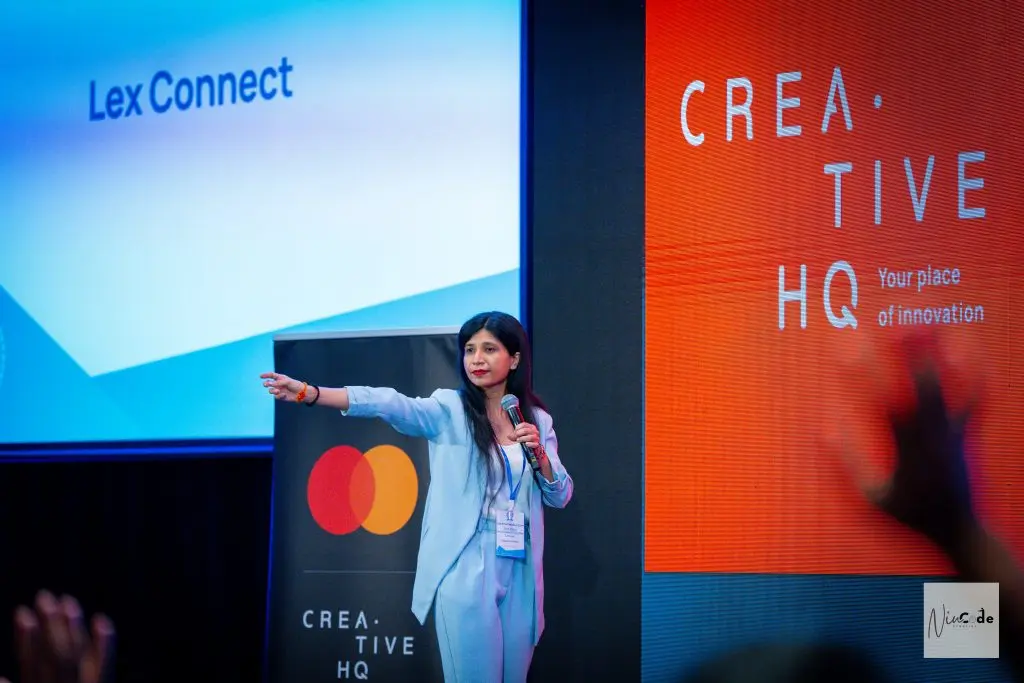
Moving forward to May, Fiji ran its first-ever Startup World Cup. ThirdRoc took the win and is now headed to the Global Final in Silicon Valley. Solé Fintech, runner-up, is off to the Asia Regional Final in Hong Kong. And LexConnect – Fiji’s first legal tech venture, and a team that didn’t place – still called the experience a win, for the mentors, connections and experience representing Fiji on stage.
Two months later, the Hub took its model somewhere no one expected: Rotuma, an island 500km from the rest of Fiji, population around 1,400, where Starlink had arrived just 14 months earlier.
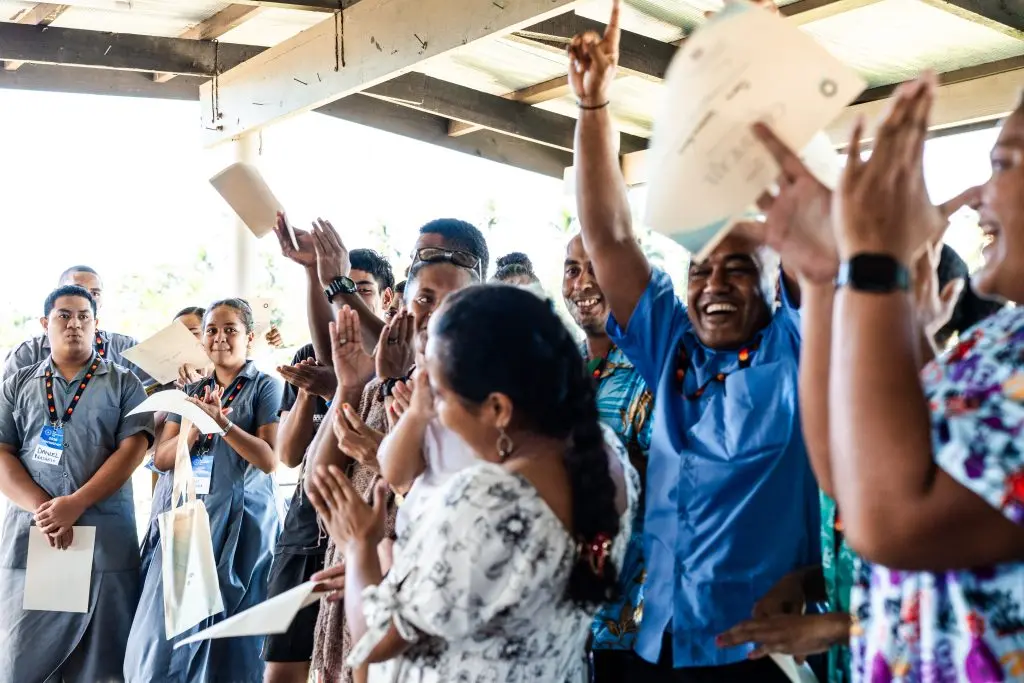
Six teams, 30 participants, and an NPS of 100. The District Officer was struck by how the students “came up with modern ideas that fit the time we live in.” One participant summed up the experience as this: “This is the way forward in trying to solve problems on the island. It is not only about thinking new ideas, it is also about implementing it.” Two of the six concepts could be running as small businesses within weeks.
A spotlight on two new Fijian founders
Voli and ThirdRoc are demonstrations of Fiji’s growing startup pipeline.
Voli: Fiji’s first mobile-first investing platform, built with the South Pacific Stock Exchange so any Fijian can invest in Fijian companies, started as an idea at the Hackathon. The Activator turned it into a functioning platform. It reached the top eight at Startup World Cup and won Rising Star at the Showcase. In the founders’ own words, without the Hackathon, Voli would probably still be an idea discussed over coffee: it gave them a reason to stop talking and start building.
ThirdRoc first connected with the ecosystem at the Unconference. Through the Activator, the team worked through the corporate, governance and legal milestones needed to become a licensed peer-to-peer lending marketplace for MSMEs – developed alongside the Reserve Bank itself, under new legislation that made the model possible in Fiji. They went on to win Startup World Cup Fiji outright.
Two ventures, from first contact to the international stage, inside twelve months.
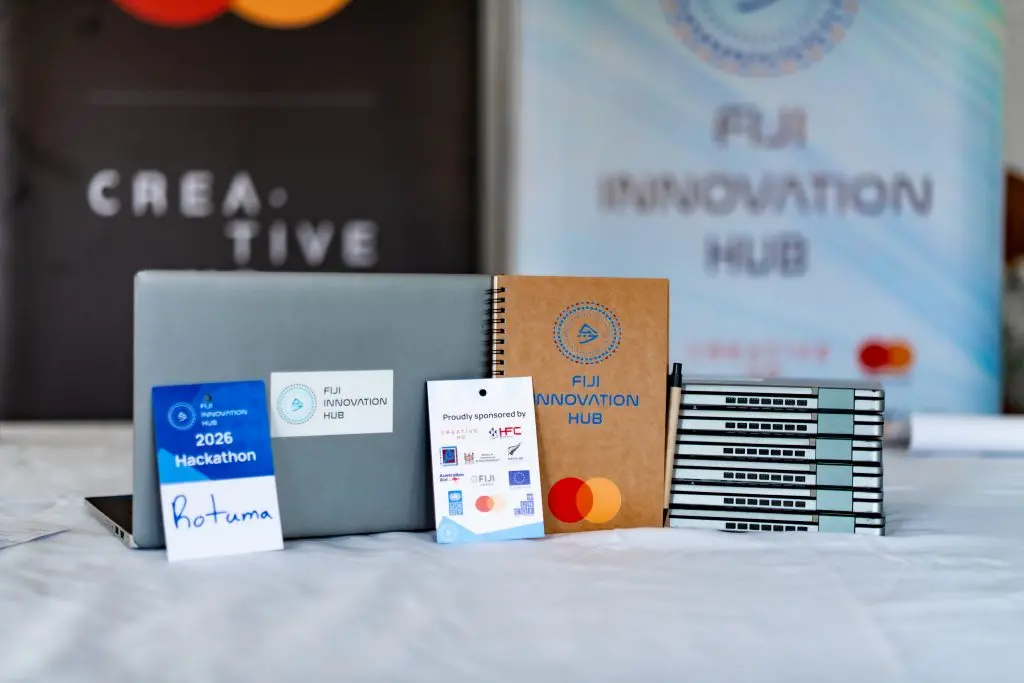
Celebrating Mastercard for making this mahi possible
None of this happened without funding and a shared commitment to innovation. Some of Mastercard’s commitment was visible: sponsoring the Fintech track and prize pool at the Hackathon, extending the Activator so it could run longer and take three more teams than planned, and funding the Rotuma youth hackathon outright. But a lot of this team’s support was quieter – so we also want to highlight: Mastercard supporting the Wellington Study Tour that set the roadmap for the whole year, the Certificate programmes that built the mentor base everything else ran on, and the fit-out of the physical Hub – including the wall mural designed specifically for the space.
They’ve been present in the room too. Thinking about all the partners involved in bringing the Fiji Innovation Hub to life – Rakin Wahed articulated this perfectly that without these kinds of partnerships “this would have taken a decade, and a decade means a generation of lost ideas in the Pacific.”
And here we are: one year of Fiji’s Innovation Hub
Fiji had the people and right energy for innovation the whole time. Talent was never the missing ingredient either. What we’ve unlocked is the roadmap, the mentors, the regulatory access, the space… the plane ticket to the international stage. And everything else that builds the Capital, Connectivity, Capabilities and Culture to innovate.
What comes next
RBF has already confirmed Year Two – with a bigger budget and part of their office’s 9th floor as the Hub’s permanent home.
Where Year One was a calendar of moments, hackathons and showcases – Year Two adds the infrastructure that runs underneath them: a staffed Hub, coaching open to anyone, a founder guide reaching beyond Suva, and incubation space inside the central bank itself.
Two teams are even off to New Zealand’s Fintech Lab in 2027!
Stay tuned for what year two brings.