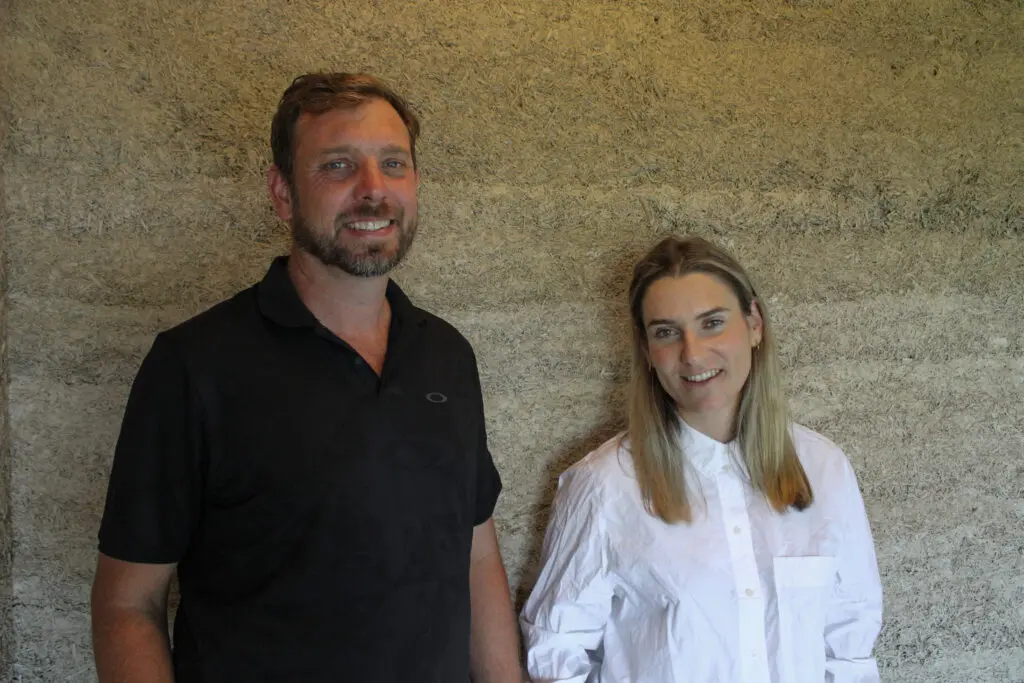
GeoBind is one of the more recent success stories to come through Creative HQ’s doors. Founded by partners Alice Hosted and Doug Sturrock, GeoBind is a great illustration of the highly creative, impact-focused companies that are now being built in New Zealand and taking on the world.
Origins
GeoBind’s vision is to provide an environmentally friendly alternative for the construction industry, helping to achieve New Zealand’s 2030 carbon reduction goals and healthier homes. The pioneering startup has developed a blended mineral-based bio aggregate binder for carbon-neutral walling solutions. Their product can be used to create a strong, concrete-like product called hempcrete. Hempcrete can be made into panels, and as a building material is breathable, regulates temperature and humidity, and is also mould resistant and fireproof.
Acceleration
GeoBind had been ticking away as a project in the background for Doug and Alice for some three years before they applied and were accepted into the 2023 CHQ Impact Accelerator. The 12-week programme came at an opportune time for GeoBind’s development, providing the team with essential tools and strategies.
After the Accelerator
Post the excitement of the three months of coaching, connection making, mentoring, capability workshops, and pitching, GeoBinds next phase was equally as busy, involving fine-tuning financial projection and gathering additional data, awards recognition and a first major sale.
“We made our first big sale just after we left Creative HQ. We managed to fulfil a shipment down to Nelson with 30 tonnes which was huge. That was a real milestone for us.”
Now and Next
GeoBind is currently transitioning from pre-revenue to commercialisation. With logistics and supply chains established, the company is poised to expand into new markets, focusing on product development, marketing, and international sales. Utilising their New Zealand experience as a foundation, the company’s sights are set on Australia and California initially. They plan to leverage partnerships to ease entry into these new markets, with an emphasis on sustainable and modular building systems.
“It was a gap analysis that we didn’t know we needed. The accelerator took us I think, in a way from basically a couple of people who had a good idea to entrepreneurs.”
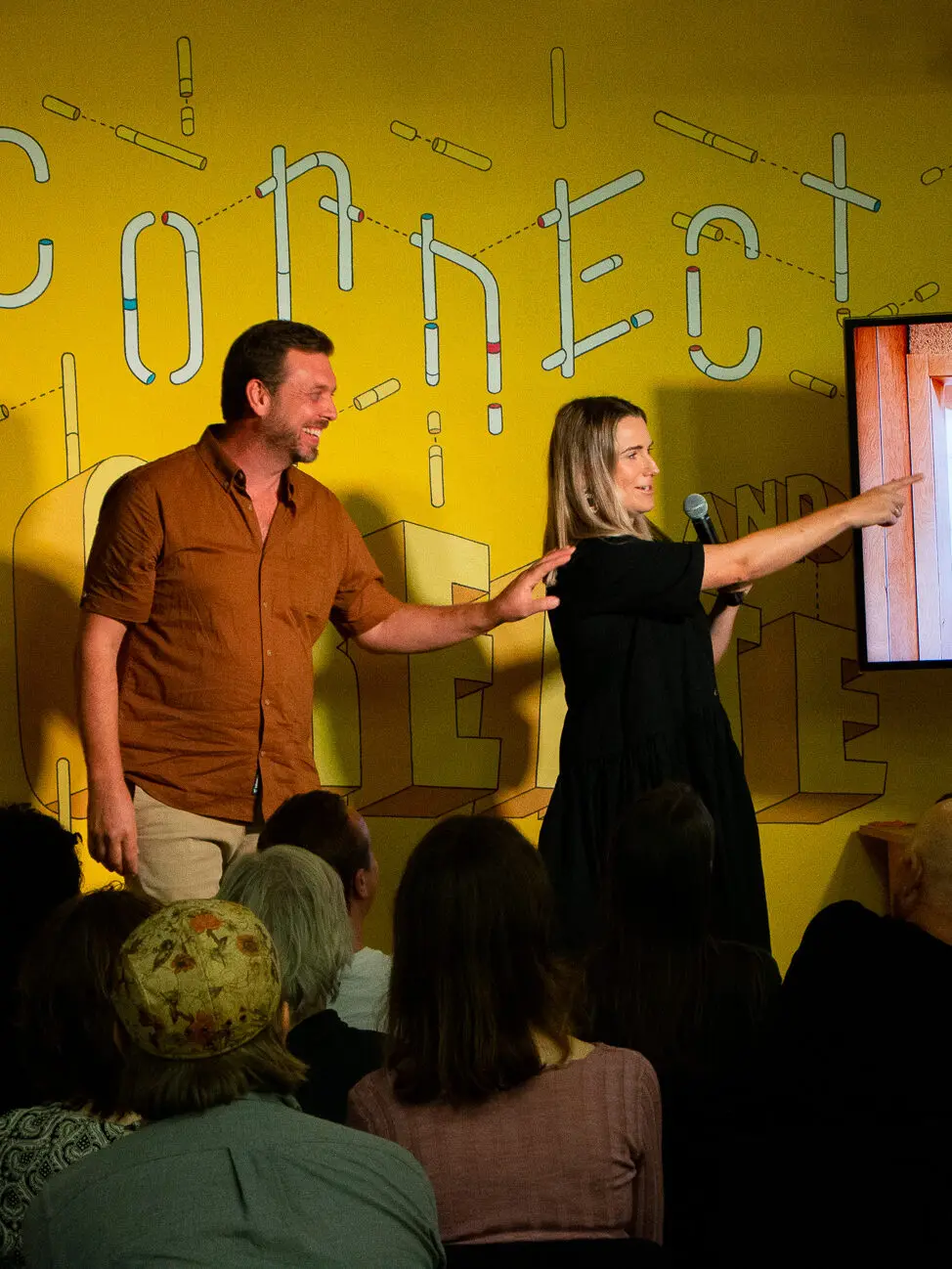
The team has ambitions to significantly influence the sustainable construction landscape, educating and connecting communities around alternative building materials and fostered a movement towards more environmentally friendly construction practices.
“We want to give people options for different ways of doing things”