Wellington has a reputation for producing ambitious startups, with many people in the city angling to join a tech company to grow their career. But despite this being a growing and energised sector, there’s conflicting data about the job market in 2026.
This month, we chatted to a variety of job hunters and recruiters to get the lay of the land. Real data and insights from the people on the ground – and here’s what we learned:
This is a market that’s evolving fast

Before diving into the data, it’s important to understand one key shift: the tech job market isn’t shrinking, it’s changing.
According to Talent Army’s Troy Hammond, many job seekers are struggling not because opportunities aren’t there, but because the roles themselves have fundamentally changed.
“Job ads are up, but the nature of jobs has changed,” he says. Hammond notes that hiring activity in his network is up around 200% year-on-year this quarter, driven largely by growth in startups and product-led companies. At the same time, New Zealand is losing talent, with around one in four Kiwis heading to Australia, further reshaping the local market.
One of the biggest shifts is the rise of “T-shaped” talent: people who combine deep expertise with broader skills across product, business and technology. Employers are increasingly looking for individuals who can operate across disciplines, rather than in narrow, specialised roles.
This is especially visible in roles like product management. Once seen as a “luxury” hire, these roles are now returning quickly but with much higher expectations. “If I’m hiring a product manager, I’m looking for someone with technical capability, product thinking and business context,” Hammond says.
Naturally, AI is accelerating this shift.
Rather than simply replacing jobs, it’s compressing them, enabling smaller teams to deliver more. While fewer traditional roles are being advertised, new hybrid roles are emerging in their place. Including go-to-market engineers and customer success engineers, reflecting a move toward more commercially aware, multi-skilled talent.
“Software engineering used to be about 65% of what we recruit. Now it’s closer to 35%,” Hammond says. As AI tools take on more of the coding, demand is shifting toward architecture, security and oversight. “The tools will write the code. Your job is to think about how it’s built,” he says.
There’s also a growing divide in how organisations are hiring. While contract roles are increasing, Hammond says this is largely being driven by the public sector. “The government struggles to make permanent hiring decisions during an election year, so they hire contractors,” he explains.
In contrast, the private sector – particularly startups – is continuing to invest in permanent hires, signalling stronger long-term confidence.
So, there’s our first nugget of good news.
At the same time, salary expectations are resetting. “Pay has dropped about 18% over the last 12 months,” Hammond says, following a period of rapid growth driven by global hiring.
Ultimately, the gap isn’t between jobs and candidates. It’s between expectations and reality. “It’s no longer about whether you’re technical,” Hammond says. “It’s about whether you can create a measurable impact.”
So, what about Wellington specifically?
More good news: Wellington’s tech job market is showing signs of recovery in 2026.
According to Momentum, January recorded a 211% year-on-year increase in job activity compared with January 2025. However, as mentioned – those contract roles are driving much of the growth.
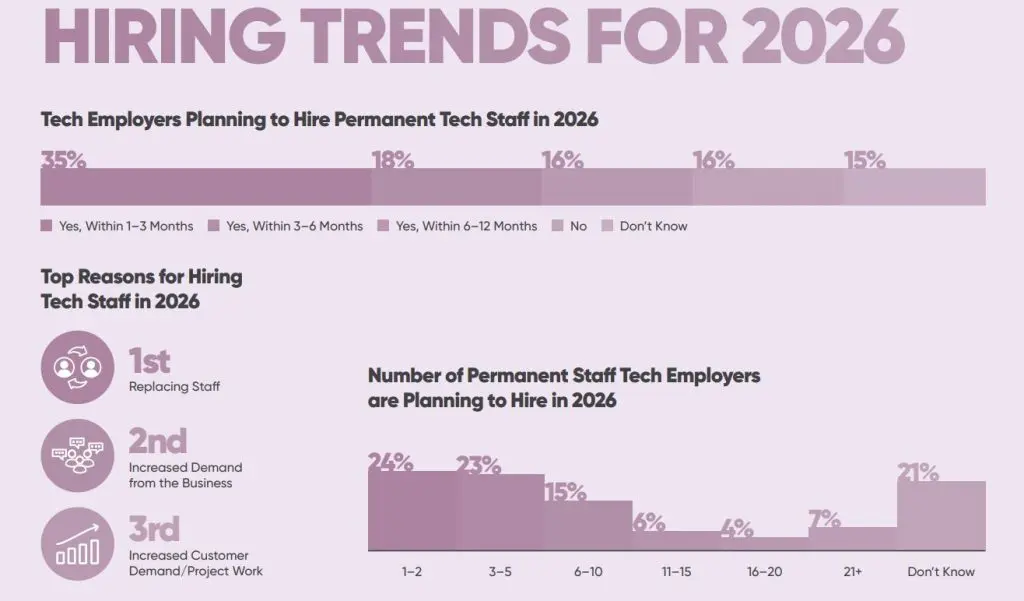
New projects are beginning to launch across the capital, signalling a surge of activity in Wellington’s tech scene. According to recruitment agency Absolute IT, 35% of tech employers plan to hire permanent staff in 2026.
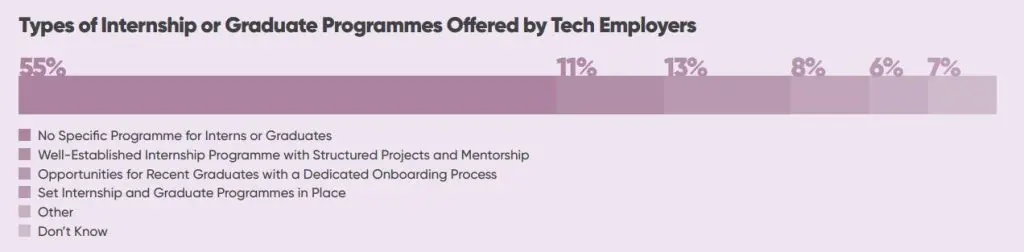
Despite this rebound, the market is facing shifts in talent availability. Wellington has seen a migration of intermediate and senior tech professionals overseas, alongside a decline in graduate opportunities, tightening the local candidate pool and increasing competition for experienced talent.
Broader recruitment data reflects similar pressures across the country. According to Robert Walters, 81% of New Zealand employers report ongoing talent shortages in 2026. The most significant gaps are in industry expertise (52%), digital and technology capability (37%), and leadership roles (31%). Employers also cite unsuitable applications (62%) and a lack of qualifications (53%) as major barriers to hiring.
In response, organisations are becoming more deliberate in their hiring strategies. Employers are increasingly prioritising quality over quantity when building teams and are placing greater emphasis on attracting candidates who align with long-term capability needs.
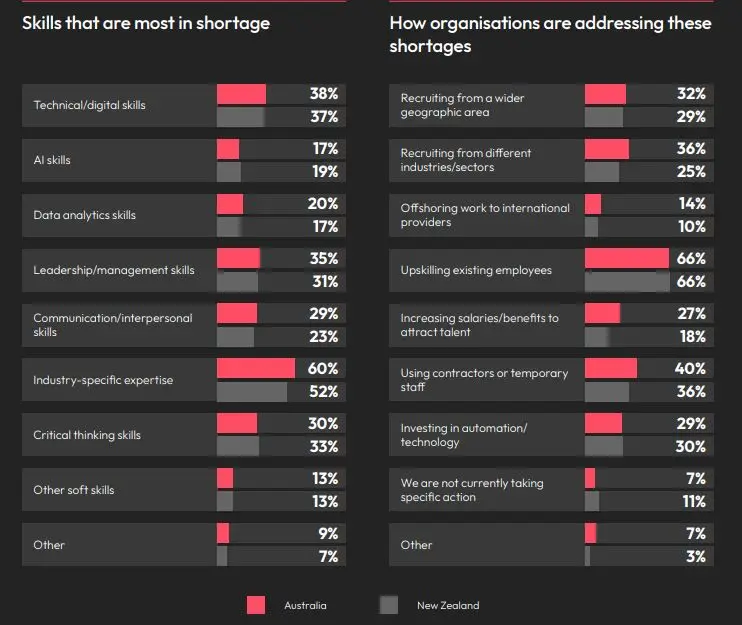
Speaking with Robert Walters, they’ve shared that the “contract market has pivoted to focus purely on delivery, with little to no appetite for capability or BAU roles like the last couple of years.” Overall, hiring is focused on mid-to-senior professionals, with fewer entry-level roles than in the post-COVID period.
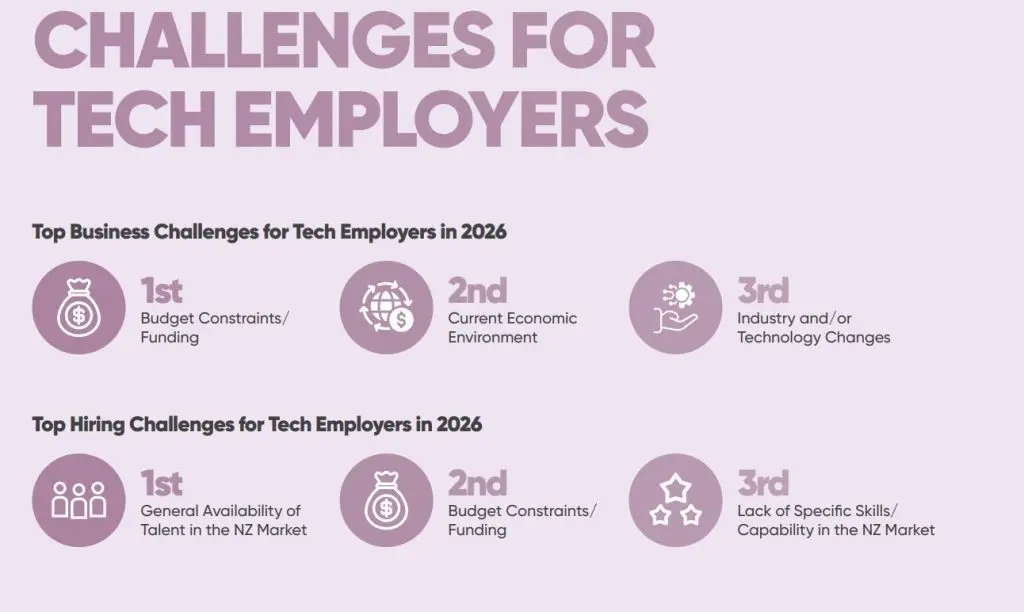
According to Momentum, January was a 211% year-on-year jump in job activity compared with January 2025. But the full first quarter tells a more complete picture, coming in at 118% up on the same period last year. Still a big number, but growth will likely slow as budgets tighten and election-year caution kicks in.
The data also shows where the growth is and isn’t landing. As skilled Kiwis continue to leave for overseas, senior roles are opening up and employers want to backfill with experienced hires. At the same time, graduate and entry-level opportunities are shrinking. If that gap doesn’t close soon, the talent shortage we’re talking about today will be nothing compared to what’s ahead.
“We’re seeing a real squeeze forming,” says Caolan Keegan, Managing Partner IT and Transformation at Momentum. “Seniors are leaving, companies want experienced replacements, and the entry points into the industry are drying up. If we don’t fix that pipeline now, we’ll end up importing the talent we should have been growing here.”
There’s another issue making hiring harder. Single roles are routinely attracting over 200 applications, and many of those CVs have been heavily polished with AI tools. The problem is what looks great on paper often doesn’t match what shows up to the interview. “There’s a trust gap opening up,” says Caolan. “Skills get inflated, hiring managers get burned, and suddenly a phone call with someone you actually know carries more weight than any CV. In Wellington, that’s always been true, but it matters even more right now.”
On AI, the picture is more balanced than the headlines suggest.
Most businesses Momentum talks to are using it to sharpen their processes and improve customer experience, not cut headcount. The bigger concern isn’t AI replacing jobs. It’s a generation of future senior talent missing out on the real-world experience they need to get there.
“If the government is serious about supporting tech job growth, an incentive for employers to take on graduates could make a real difference,” says Caolan. “The companies bringing in juniors today are building Wellington’s senior talent pool for the future. That’s something worth backing.”
Which now begs the question – how do you get cut through and find a job in Wellington’s tech sector?
Let’s be real. Trying to find a job in any sector is a struggle and Wellington has a pool of talented individuals, so it’s a very competitive market. Wellington’s tech scene is a thriving ecosystem that goes far beyond developers and IT specialists.
While technical roles have historically formed the backbone of the industry, to Troy’s earlier comments – the makeup of these roles is fundamentally changing. Roles such as Project managers, UX designers, marketers, customer success managers and business analysts all play a part in helping tech companies evolve, deliver projects and connect with clients. The skills required in these roles, however, aren’t what they were 2 years ago.
The good news though is that… if software development isn’t your thing… in 2026 that isn’t a bad thing!
When you think of a tech company, what comes to mind?
Wellington’s tech scene isn’t just one big industry. It’s a mix of different sub-sectors, each with its own vibe and opportunities.
From startups building new digital products to established companies working in software, gaming, data and creative tech. There’s a wide range of paths people can explore within the city’s growing tech ecosystem.
- Creative Tech – Game dev, animation, VFX, AR/VR. Where tech meets storytelling.
- Fintech – Digital banking, payment platforms and smart financial solutions.
- Climate Tech – Sustainability, clean energy, carbon tracking and greener innovations.
- Health Tech – Digital health platforms, telehealth and medical devices.
- EdTech – E-learning platforms and interactive tools.
- AI & Data – Smarter analytics, automation and predictive solutions.
Together, these sub-sectors make Wellington a dynamic, multi-faceted tech hub, with opportunities for a wide range of skills and interests.
Where can you look?
Most jobs are advertised online, making it easy to explore job opportunities in Wellington’s tech sector. Some of the top sites to check include:
- LinkedIn Job Search: Be sure to follow the companies you want to work with directly – sometimes they list jobs privately and promote via their own channels
- Wellington Recruitment Agencies: Momentum, Hays Recruitment, PlaceMe, Absolute IT, Talent Army, Robert Walters
- Seek
- Matchstiq
- Zeil
- TradeMe
- Jora
- Graduate Internships
- Summer of Tech: Check out Summer of Tech for internships
A growing sector to watch – for job seekers
Wellington’s creative tech sector is buzzing, spanning game development, animation, VFX, AR/VR and interactive design. With companies ranging from small indie studios to global players, the city has a vibrant creative tech scene that’s looking for fresh talent.
However, jobs in this sector are often shared through networks, company websites and specialised platforms. To be in the know, keep an eye on these channels::
- ArtStation – Roles in game art, animation and VFX.
- NZ Game Developers Association – Networking and job listings for the local game industry.
- Weta Digital Careers – Wellington-based studios hiring in animation, VFX and software development.
- Indie Game and animation companies: Floating Rock, Dinosaur Polo Club
Networking is key
Online listings are not the only way to land a role. Wellington’s tech community thrives on connections, so attending meetups, workshops or industry events can open doors you won’t find on a website. Even a casual coffee chat or networking at a local tech panel can lead to a job opportunity.
Keep an eye on our Connect page for events and meetups.
So, is all hope lost for job hunters, or are there reasons to be optimistic if you’re wanting to grow your career in this sector?
We spoke to a number of job hunters for this piece and, as you’d expect, the success they’re having really changes based on the stage you’re at in your career. It’s a tough time for students and juniors wanting to get a foot in the door, in particular. Creative HQ is working closely with Summer of Tech, local universities and various tech companies to understand how new opportunities can be created.
For skilled professionals however, we were surprised by the feedback on the success of their job hunts. One woman who’s recently landed a role at one of Wellington’s fastest growing tech companies said: “When you’re a specialist, sometimes it can look like nothing relevant comes onto the job market. But don’t settle. Be patient. Speak to recruiters, chat to people in similar roles. Find the opportunities before they get advertised. Or, better yet, let them come to you by making yourself discoverable”.
Likewise, other job hunters we spoke with commented on the strength Wellington has with networking “It’s pretty easy to get a meeting with the person you want to meet, or find events that can open a door to the community you want to be working within.”
Notwithstanding, many skilled people we spoke with commented on their surprise at the volume of applications they’ve had to send to employers. No matter how skilled you are, everyone’s having to work harder to land that dream role.
So, the bad news… It goes without saying, tough out there. Especially for people working to get a foot in the door and start their career. The good news however: Incredible roles exist in Wellington – and they are growing across our tech sector.
Stay tuned for more updates as our economic conditions change.